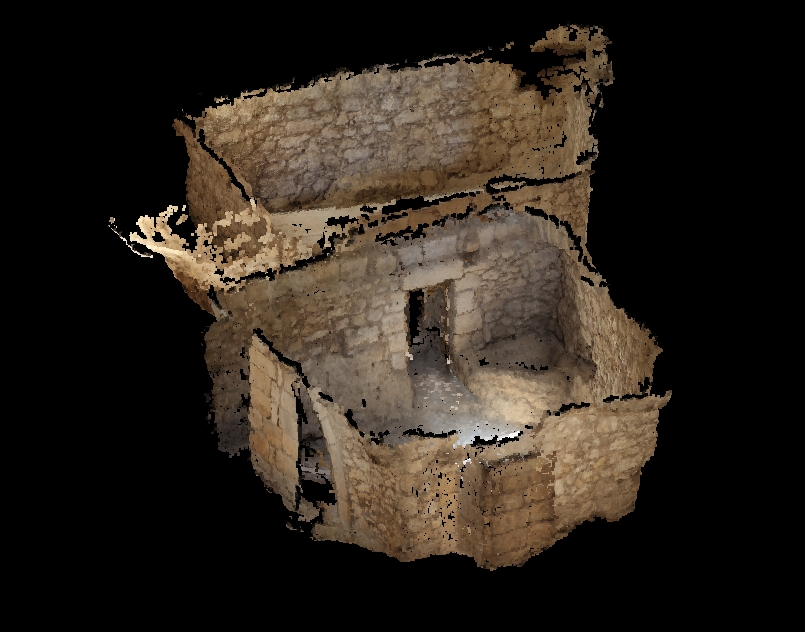
The result using Photosynth proved convincing enough, so I opted to go the further mile … and try out VisualSFM, as suggested by Susie. I must say, it was well worth the try, and the (limited) effort it takes to get the hang of the program. It takes some time and patience while it works, especially on my laptop which I had bought with far less maths and processing in mind. But anyway, I’m still old enough to remember pressing PLAY in the cassette player and going for a cuppa while programs load on the Commodore 128 … so I went for lunch while it worked!
Here’s a first result, using VisualSFM to plot dense points. Need I comment? I’m quite impressed. And impressed too at how simple (and extreme low budget!) the whole experiment proved to be. Gone are the hours is takes, with plumbob and measuring tapes to measure all the points of a site. I would not have had the patience to plot all the walls, built in a wet rubble technique.
Archaeologists, take note!!
 Nova et vetera
That is really great for 100 photographs. It reminds me so much of the files I am processing right now (mud brick houses from Amara West) I had to look twice.
Yes, I saw some of the work on your blog: very interesting work. The technique here, though, is wet rubble which is why they survive so well. And to be fair, it is nowhere as ancient. This technique in Malta generally dates to the Middle Ages.