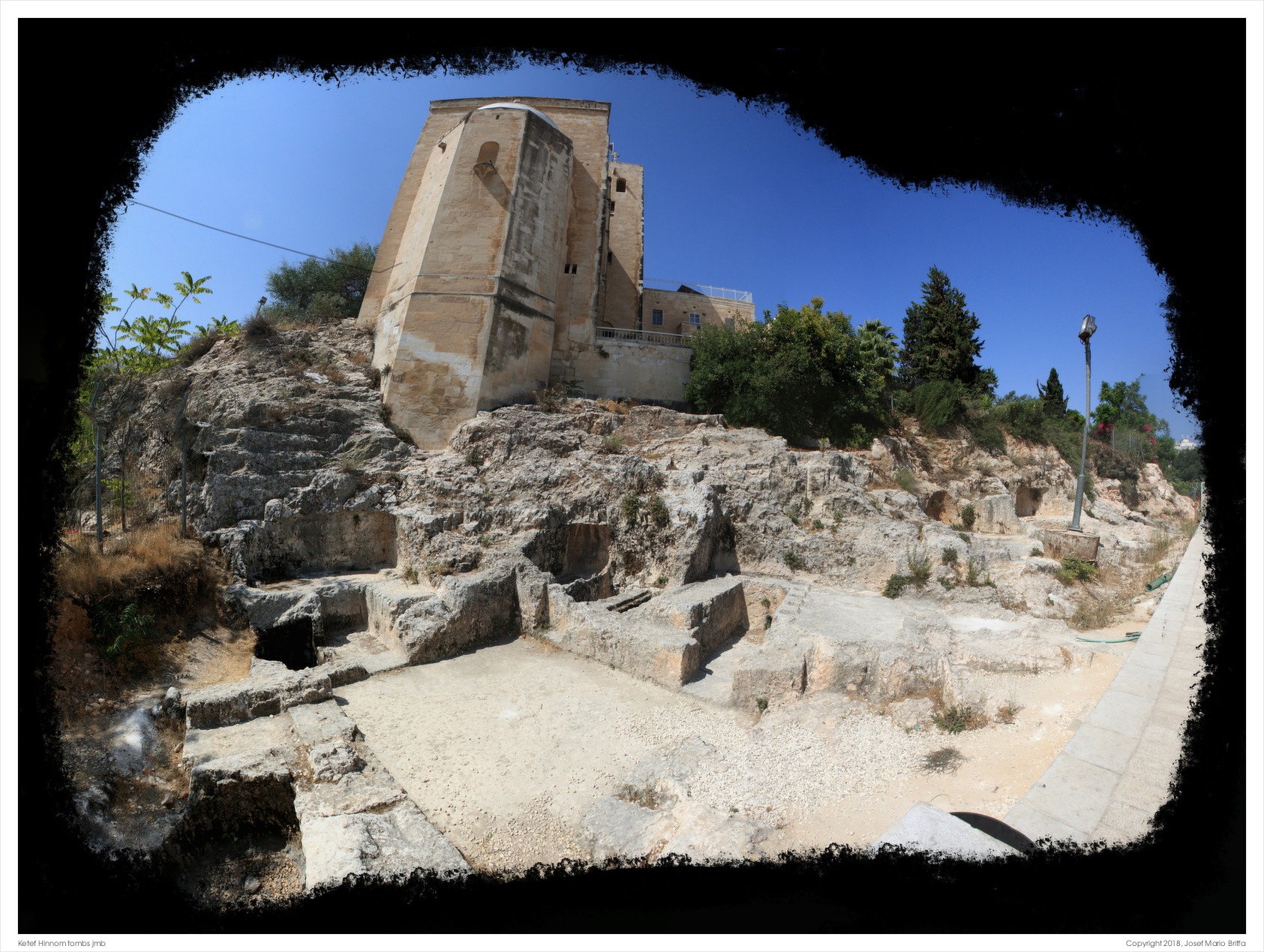
Composite photo of the Tombs at Ketef Hinnom. Photo: Josef Mario Briffa (click for added detail)
Jerusalem, as you would expect of an ancient city, has plenty of hidden gems. Some like this, are hidden in plain sight, tucked away in a little strip of land at the foot of St Andrew’s Scots Memorial Church, behind the Menachem Begin Center, very close to the old Railway Station or First Station. The site, excavated in 1979 by Gabriel Barkay, is now known as Ketef Hinnom (=”the shoulder of the Hinnom Valley”).
I photographed the site back in August 2014. The photo above is actually a composite of 20 photos, in three rows – four in the top row, six in the middle row, ten in the bottom row. They were stitched together in Image Composite Editor, but in two stages: first each row separately, then the three rows to one. Excuse the appearance of the trim: wasn’t too sure how best to sort that out, but couldn’t crop normally, as I would have preferred.
The site itself is — for most visitors — underwhelming. You can see what remains, after quarrying activity, of a row of burial chambers dating to the Late Iron Age, and reused in the Roman period. But the meagre remains visible belie the significance of the site for its finds, and particularly two very small silver amulets, with ancient Hebrew writing, datable to the sixth century BC, with blessing formulae very similar to the one in Numbers 6,24-26. These are now on display at the Israel Museum.
The existence of these amulets, of course, says nothing of the date of the text of Numbers, since liturgical writings are likely to be conservative, and may have been in use already for a long time before being included in the text. However, it is striking that the formulae invokes only the Lord (using the Tetragrammaton) unlike the well know blessing inscriptions from Kuntillet Ajrud and Khirbet el-Qom which invoke the Lord alongside his A/asherah.
Until recently, the site was accessible only through the Begin Center, but a new archaeological garden, just off the junction of King David street and Beit Lehem Road, gives far easier access. A number of explanatory panels have also been set-up — complete with plans, photographs and drawings (photos below) — which make the place more visitor friendly.
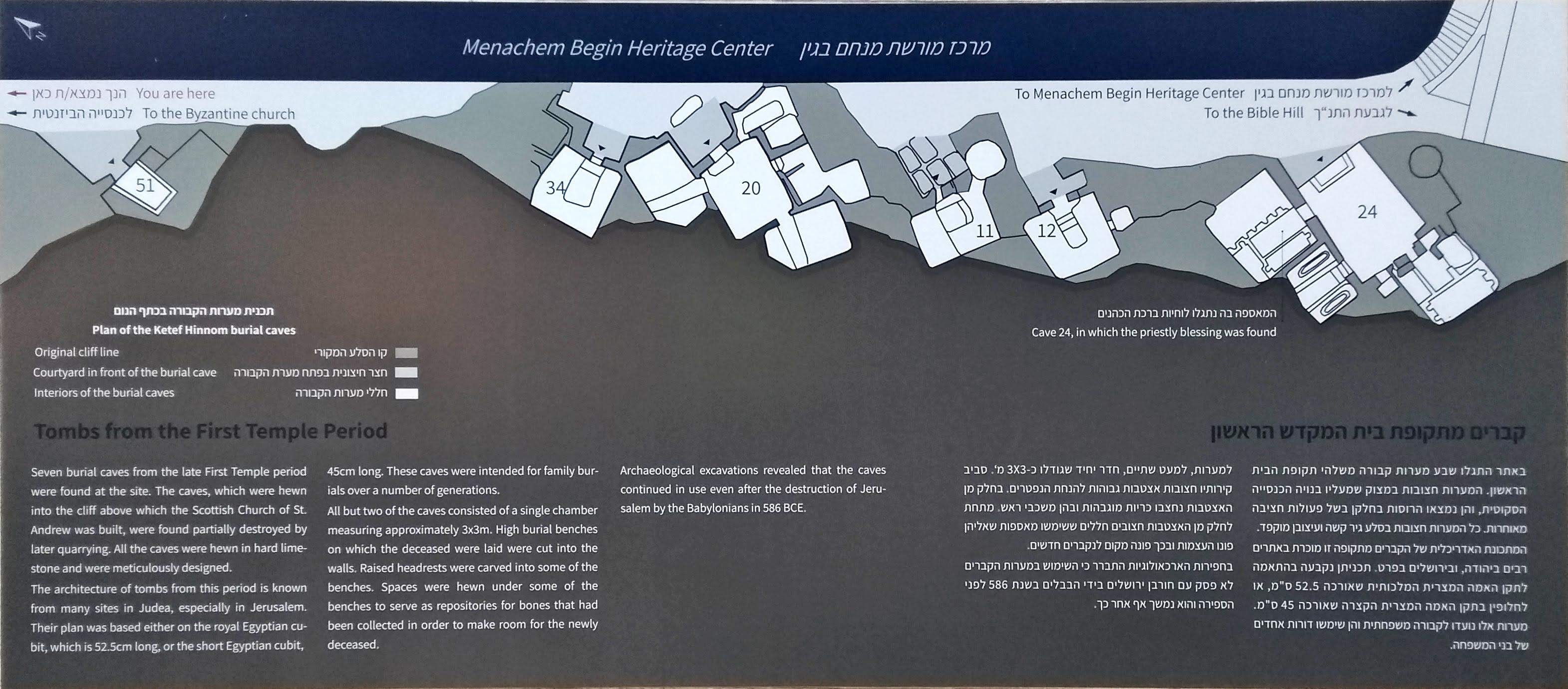
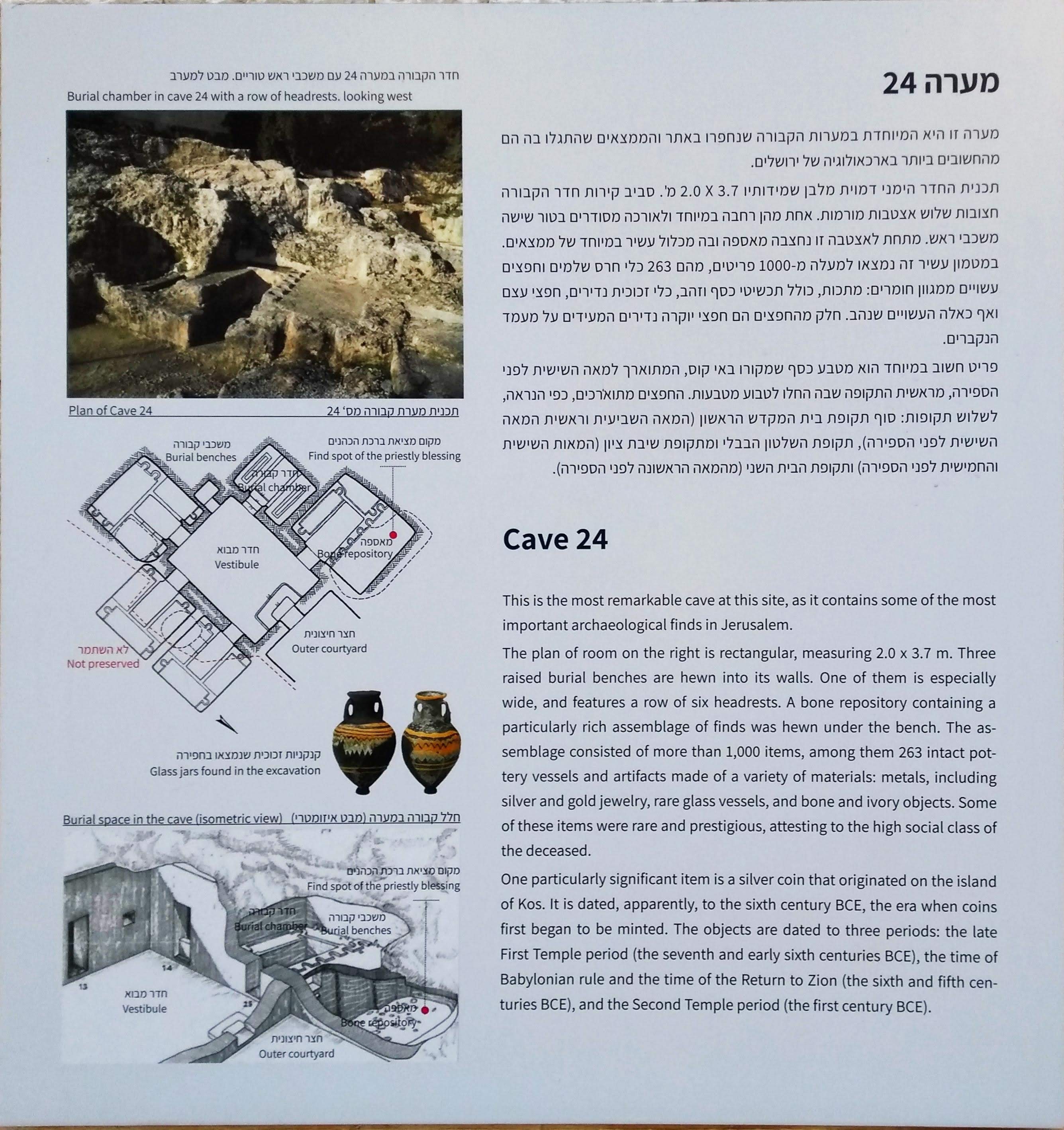
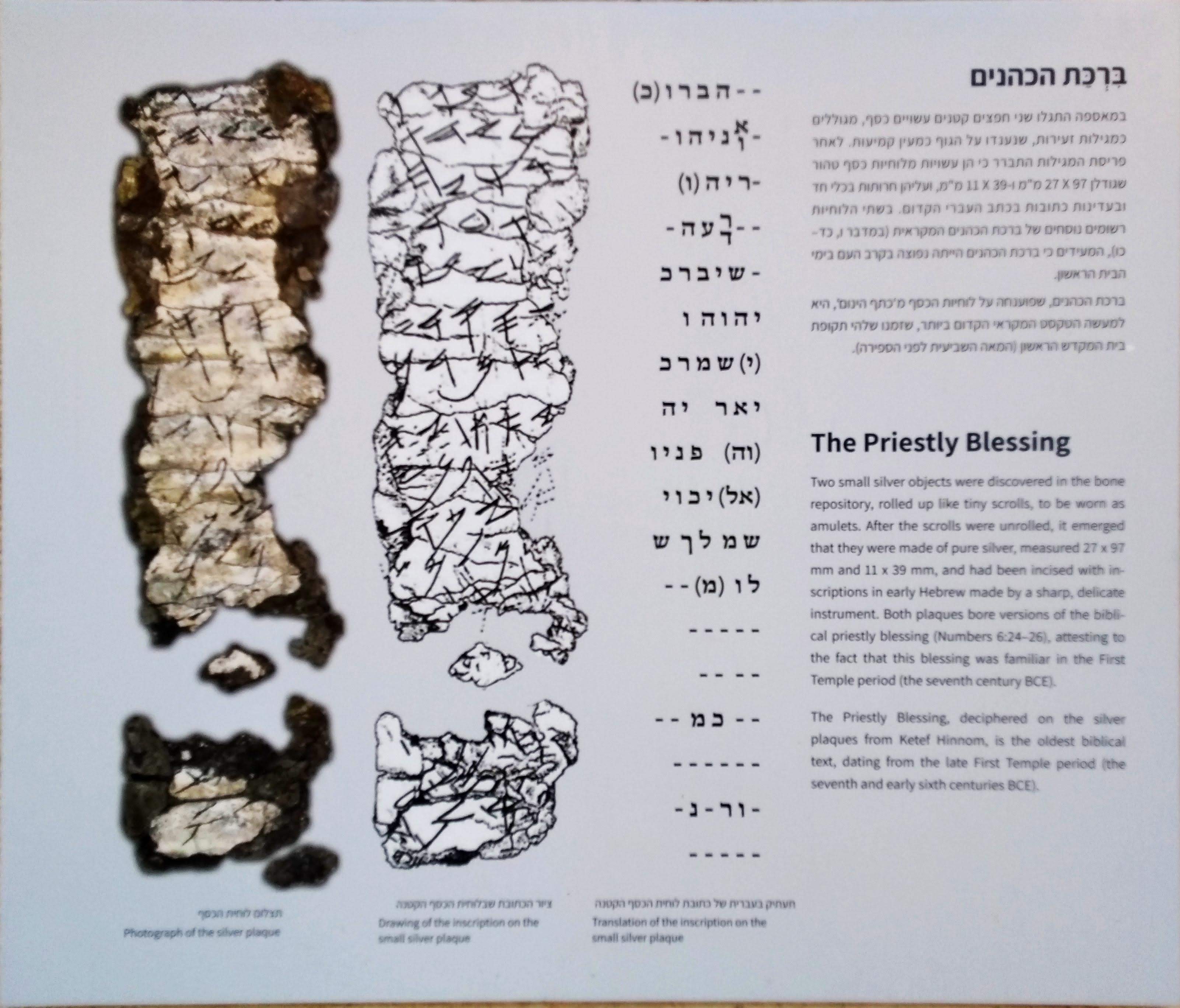
Information panels at the site.
 Nova et vetera
You may want to give hugin a try for compositing images. It can handle the lot in one go and also allows you to render using different projections. I quite liked the trim, given the limited options available in such cases.
Thanks, Johann. I will give it a try. I actually worked this picture quite a while ago. The problem with compositing in ICE wasn’t the number of images as such, but the fact that it was getting confused — I suspect as a result of the rather similar elements in the detail — such that it was compositing them in weird and wonderful ways. I found I could work around the problem by stitching first in three rows, than stitching the rows together.
Oh I see 😀. Yeah it can depend on what overlap exists. You want to be generous with overlap, at least 25-30%…