[italiano]
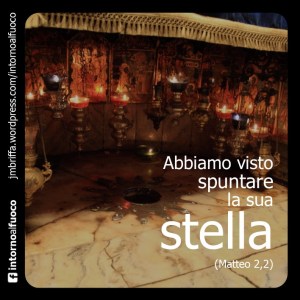
“We three kings of Orient are …” neither three, nor kings … or, at least, not in the narrative of the Magi in Matthew 2,1-12. Yet, the tradition of the three kings has its roots, as we shall see. It could well be a fun question for a Bible themed pub quiz! Now that I have — I hope — drawn your attention, I’d like to invite you to a lectio on the Gospel of the Feast of the Epiphany (or Manifestation) of the Lord — the visit of the Magi in Matthew 2,1-12.
Before any other comment, I invite you to a first reading of the text [here on bible.oremus.org]. Remember also to prepare to enter into prayer — some practical suggestions here.
Lectio
Having read the text a first time, I’d like to point out some details …
[1] wise men from the East came. Wise men, or magi. The Greek text speaks of magoi — it is the same roots of magic and magician, even though we should not understand it in the modern sense. Matthew is referring to the sages of the East, in ancient Mesopotamia and Persia. In the ancient world, the Babylonians were know for their observations of the stars, as well as mathematics. If we had to translate the sense in Matthew, we could actually speak of scientists.
[2] we observed his star at its rising. Observing the stars for important from both a scientific and a religious perspective. Ancient clay tablet from Babylonia also document astronomical observations. We should remember that, in the ancient world, astronomy and astrology were not separate fields — so, a star at its rising was a sign that could not be ignored. It is also likely that there is an allusion to the prophecy of Balaam in Numbers 24,17.
[3] When King Herod heard this, he was frightened. Herod the Great was King of Judea, an important king for his great projects, including the rebuilding of the Temple in Jerusalem. Yet, he was a client king of Rome, and was paranoid especially towards the Hasmoneans (the priestly family that ruled before him, in which he married) enough to get his brother-in-law, wife, mother-in-law, the father of his mother-in-law, and two of his sons, killed.
[4] calling together all the chief priests and scribes of the people, he inquired of them. Herod consults the religious experts, that actually know where to lead them in the right direction. But being religious experts is not enough, if this knowledge does not lead to them to seek the Lord!
[6] And you, Bethlehem, in the land of Judah. The religious experts in the narrative cite prophet Micah (5,1). Bethlehem is the city of origin of David, and the place of origin of the new leader of Israel, that the Gospel sees as fulfilled in Jesus.
[7] Herod secretly called for the wise men. Herod called the wise men secretly: it is worth noting how evil avoid publicity, avoid the light — both real and symbolic.
[8] bring me word so that I may also go and pay him homage. Considering what happens soon after this text, the intentions of Herod are rather different to what he states!
[11] they offered him gifts of gold, frankincense, and myrrh. Here is probably the origin of the three magi — although the three refers to the gifts, not the persons. An ancient oriental tradition, actually, speaks of twelve. Here too is the connection between magi and kings: Isaiah 60 speaks of “kings to the brightness of your dawn” (60,3), and the caravans of camels and dromedaries “bring gold and frankincense” (60,5). The meaning of the gifts is also discussed. Saint Ireneus (c. 130-202 AD) reads the gifts symbolically referring to the nature and missione of Jesus: myrrh, used in burials, since Jesus was to die and be buried for us; gold as a king; incense as God (Advesus Haereses 3.9.2). Others speak of gold, frankincense and myrrh as three types of incense, offered to kings and divinities.
[12] having been warned in a dream not to return to Herod. Dreams, in antiquity, were seen as a place for the divine to communicate with the human. Matthew speaks of dreams to Joseph (1,20; 2,13.19.22) and the wife of Pilate (27,19).
Meditatio
Before going further, it is worth returning first to read the text again enriched (I hope!) by the comments above. We can then reflect on the text and on ourselves, adding any questions that emerge from the same reading.
- Where do I see myself in the story? Among the religious leader (religiously knowledgeable), among the magi (strangers, scientists)? Maybe both?
- Which star do I follow? What draws me to the Lord? What leads me away?
- Does my religious knowledge lead me in search of the person of Jesus? Or do I find myself as well informed, even religious (in the sense of practice and cult), but perhaps without a personal relationship with the Lord?
- We do I find — like Herod — that the Lord disturbs me? Gets me into crises mode? Where, in my life, is the Lord an inconvenient presence, as God challenges me to change?
- Where are the nooks and crannies of darkness, secrecy, in my life, that need the light of the presence of God?
- What gifts do I bring to the Lord? What can I offer?
Oratio
I allow my reflection to open into conversation with the Lord, into prayer. At the beginning of this new year, what would I like to ask the Lord? What graces for me, for my nearest and dearest, for the rest of the world? What weighs me down? What would I like to ask forgiveness and healing from? What gifts have I received for which I’d like to thanks and praise God?
Contemplatio
Finally, I let the words become silence, a silence filled with the presence of the Lord.
I conclude with an Our Father.
First published in Italian on 04.01.2018
 Nova et vetera