My tuppence on the issue.
- No, Pope Francis’ motu proprio did not restrict/suppress mass in Latin. I grew up with many sung high masses in Latin back in Malta, all according to the liturgy as reformed by Vatican II. I’m sure that the average congregation in my home parish could happily continue singing along if I intone any part of the Missa de Angelis. Don’t confuse the language (Latin) with the ritual books.
- If you think that the Tridentine form is more “authentic”, more “traditional”, more ancient, you are mistaken. I’m sorry but there is no more polite way of putting it. Vatican II was not only about the vernacular (for more active participation), but instrumental in going back to more ancient sources of the liturgy, digging deeper into the richness of Tradition. And liturgy was enriched, not impoverished by that exercise.
- It is ironic that Latin was introduced for liturgy in Rome not because it was a sacred language, but because it was the vernacular, and allowed the community to understand and participate better, than Liturgy in the original language of Roman liturgy, which was Greek. We still have a remnant of that when we sing our Kyrie Eleison.
- If you’re a strong advocate for “Vatican II” liturgy, please don’t look down on those who advocate for the Tridentine form. I actually believe that they have an important point to make: yes, it is easy for the Liturgy to lose its sense of the sacred, to become too “ordinary”. I too have been to far too many masses where the focus is lost. That is an important issue not to be overlooked, whichever liturgical books you prefer to use. I agree on the problem, but disagree on the solution. After all, Vatican II continued the work of reform of the Liturgy (which — by the way — was initiated by none other than Pope Pius XII!) because the Tridentine form had become run-of-the-mill, ritualistic often devoid of participation and piety … which is why the reform was actually very welcome.
- At the end of it all, remember that the Good Lord chose the simplest of means — bread and wine — as a sacrament of his Divine Presence among us. As on the road to Emmaus, Christ walks with us, explaining the Scriptures and Breaking the Bread. As for the rest, the Church needs the space to embrace all that is conducive to prayer and to facilitate that encounter with the Risen Lord: whether it’s sung high mass in Latin in a Gothic cathedral, or accompanied on the guitar in the countryside, in the beauty of God’s creation. Don’t mix what is foundational, with what is — after all — secondary.
[first published on Facebook, 18 July 2021]
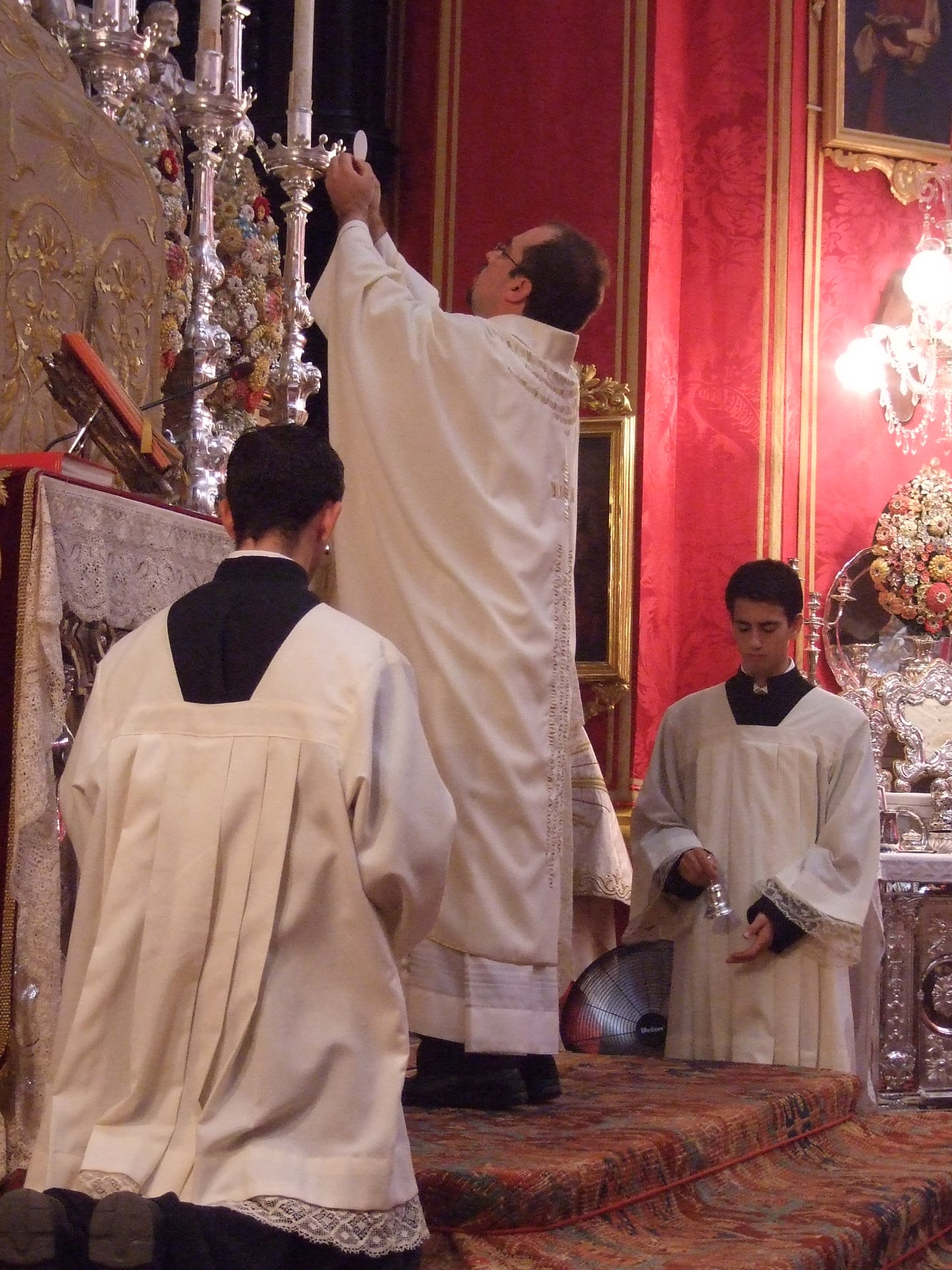
 Nova et vetera