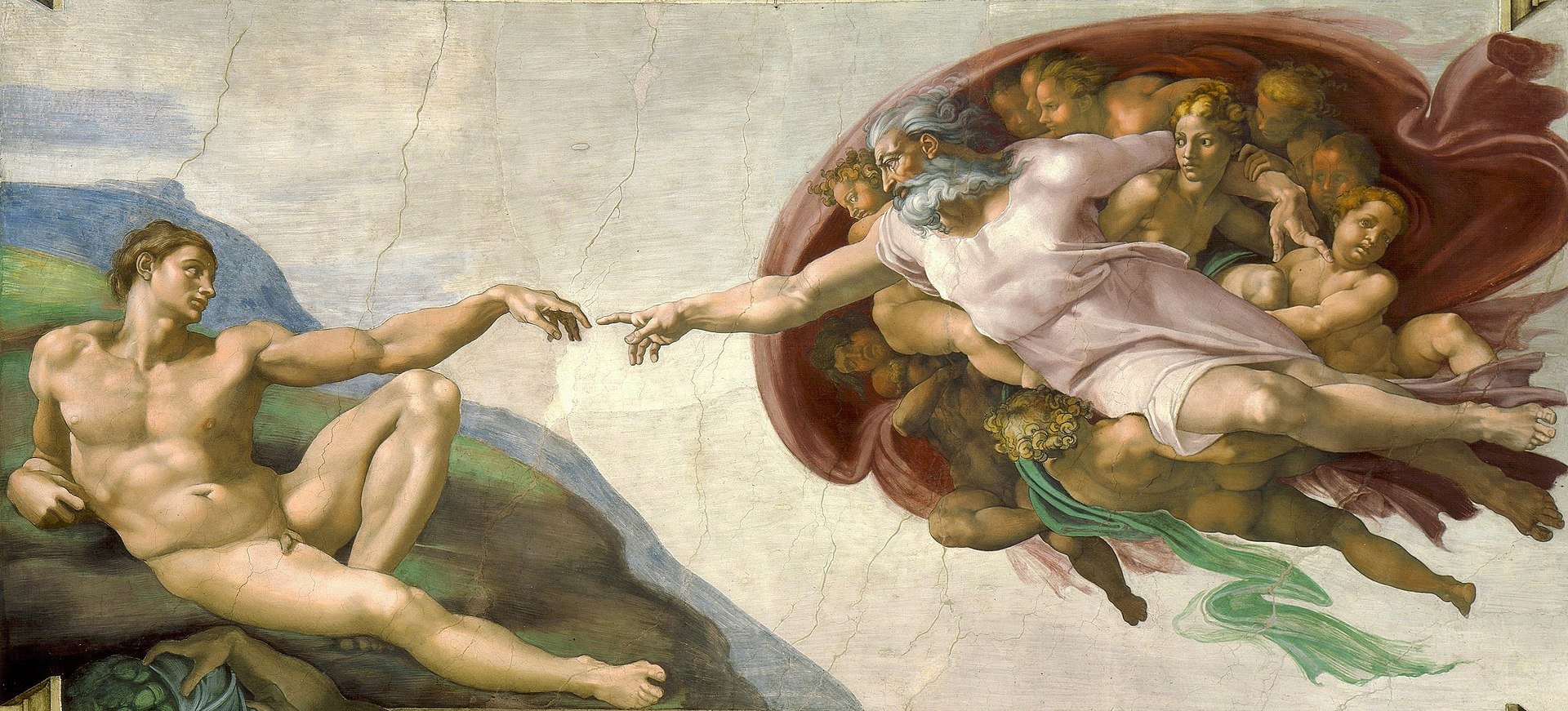
Opening up this morning papers, I woke up to the news — on The Sunday Times of Malta back page — that Only half of Maltese believe in evolution. Good grief. Should have thought that we had crossed that bridge a long while ago. (And we’re worried about Artificial Intelligence.)
I wonder why so many still have issues with evolution. It is, after all, the best scientific model that fits the data that we have, and the more the years pass the more our understanding in this regard is being refined. I wonder whether the underlying issue is that it would take humanity off the pedestal, and remind us that we are part of the natural world!
Some will of course, bring up the old science vs religion business, and remind us of Galileo in front of the Inquisition. Christianity has its bad days, but over all, Christianity has rather contributed to science. Where do you think universities came from? And who was copying the scientific texts over the centuries? The very idea of the “big bang” itself was proposed by a Catholic monsignor (Georges Lemaître), who apparently was rather miffed at Pius XII trying to harmonise this idea with the book of Genesis.
I have, occasionally, been asked whether I believe in evolution. To me its a no-brainer. And “believe” is the wrong word. It is the model of understanding that best fits the data, and I stick to it. Creationism, to me, is a disservice to religion. It’s a refusal to deal with the complexities of reality.
But how to reconcile the idea of a creator God with evolution? How can both be true? To me the mistake is presuming that truth only works at one level. But truth is multi-layered and multifaceted. Should I fall in love, an endocrinologist will surely be able to explain the hormonal and chemical side to the story, and the neuroscientist study the synapsis firing in my brain. But I guess we’d all agree that the language of love is best expressed in poetry. So which one is true?
Similarly, the hard sciences can explain and narrate the how of the universe around us, and the origins of our species. But it can never provide the poetry of the universe, never narrate its meaning. That is why mythologies, ancient and modern (I love Tolkien’s Music of the Ainur!), have filled in this gap.
That is where faith can find its place. It can help us unpack the why and the who of creation, also with the humility of realising that, when we think we have the full answer, we must be surely mistaken, as we stand in awe, in front of the immensity of the universe.
 Nova et vetera